

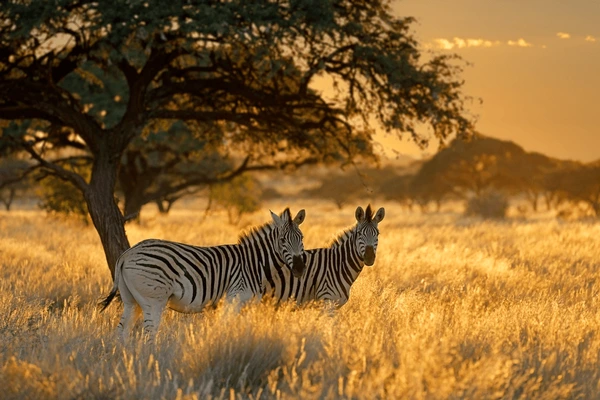
Camera technology is evolving rapidly, and one of the most significant shifts in professional imaging is the rise of event-based sensors. Unlike traditional frame-based cameras that capture full images at a fixed interval, event-based cameras respond only to changes in luminance at each pixel. This produces a continuous stream of micro-updates with microsecond latency, allowing motion to be recorded with extraordinary clarity. While originally used in robotics and autonomous systems, event-based imaging is now entering sports broadcasting, wildlife photography, and cinematic action capture. Understanding how to integrate event data with conventional CMOS imagery is becoming a crucial skill for advanced shooters, cinematographers, and imaging engineers.
This article explores how event-based camera systems work, how they can be fused with standard image sensors, and the workflow adjustments needed to achieve the best results in fast-moving environments.
The Limitations of Traditional High-Speed Capture
Traditional high-speed shooting attempts to solve motion blur by increasing shutter speed and frame rate. However, this approach introduces several challenges that become more problematic as speed increases.
Problems With Conventional High-Speed Capture
1. Rolling Shutter Artifacts
Most CMOS sensors scan line-by-line. During high-speed movement, this creates warping, skewing, and geometric distortion. While global shutter sensors exist, they often sacrifice dynamic range.
2. Exposure and Noise Trade-Offs
Fast shutter speeds reduce exposure time, forcing ISO increases. This produces visible grain and color instability, especially in low or mixed light.
3. Data Bandwidth Overload
Capturing 240+ FPS RAW footage demands massive internal memory, extremely fast codecs, and sustained write capability. This increases system heat, battery drain, and media cost.
4. Limited Responsiveness in Unpredictable Movement
Wildlife and elite athletes change direction faster than autofocus and tracking algorithms can react. Even high-end mirrorless systems sometimes lag behind.
These challenges highlight why new systems must be reactive, not just faster.
What Makes Event-Based Cameras Different
Event-based cameras operate at the pixel level, detecting changes in brightness as they occur, instead of waiting for a scheduled frame capture. Each pixel reports:
-
What changed
-
By how much
-
When the change occurred
This means the camera outputs a temporal stream rather than a sequence of complete frames.
Key Advantages
-
Microsecond Latency: Captures motion transitions almost instantly.
-
Blur-Free Motion: No need for extremely fast shutter speeds because motion is tracked continuously.
-
Lower Power and Data Rates: Only changes are recorded, drastically reducing data volume.
-
Natural Tracking of Movement: Ideal for subjects with unpredictable motion patterns.
The result is motion capture that feels organic, highly precise, and fundamentally different from conventional video.
Fusing Event Data With Standard CMOS Sensors
The most powerful systems use dual-sensor fusion, mixing event streams with high dynamic range (HDR) CMOS frames.
How Fusion Works
-
The CMOS Sensor captures scene structure, color, and detail.
-
The Event Sensor captures micro-movements and temporal dynamics.
-
The Imaging Pipeline aligns and merges the data using:
-
Optical flow estimation
-
Timestamp synchronization
-
Adaptive sharpness and motion weighting
-
-
The output is a high-detail, motion-accurate image or clip.
Benefits of Fusion
-
Sharp detail with fluid motion
-
No need for extreme shutter settings
-
Improved tracking autofocus through real-time motion cues
-
Increased clarity in chaotic or rapidly shifting environments
This hybrid approach is especially effective in sports arenas, racetracks, bird-in-flight scenarios, and untamed environments.
Sports Imaging Applications
Event-based capture excels when subjects move faster than conventional AF and exposure systems can handle.
Example Use Cases
High-Velocity Ball Sports:
Baseball pitches, tennis volleys, and soccer strikes can now be captured without blur at transitional moments.
Sprint and Track Events:
Motion phase analysis becomes more precise, providing frame-accurate stride and posture insights.
Gymnastics and Freestyle Athletics:
Event streams preserve rotational timing without requiring extreme lighting setups.
Workflow Adjustments for Sports Shooters
-
Maintain a wider aperture since shutter speed is less restrictive.
-
Rely more on subject motion cues than contrast-detect AF.
-
Configure capture to synchronize timestamps across event and RGB streams before ingest.
Wildlife Imaging Applications
Wildlife subjects rarely move predictably, making tracking accuracy crucial.
Advantages in the Field
-
Quick reaction to sudden flight or attack behaviors
-
Sharp definition in wing beats, tail flicks, and muscle contractions
-
More stable results under canopy shade and dusk lighting
Considerations for Field Photographers
-
Use lenses with high-speed linear motors to match temporal responsiveness.
-
Prioritize global timecode alignment for multi-camera remote setups.
-
When shooting stealthily, take advantage of the lower power draw of event-based systems.
Editing and Post-Processing Considerations
Event streams do not behave like typical footage, so editing workflows must adjust.
Recommended Pipeline
-
Ingest event and CMOS data separately
-
Convert event data into:
-
Motion vector fields
-
Edge-enhanced frames
-
Continuous temporal overlays
-
-
Fuse in post using:
-
Motion stabilization engines
-
Optical flow blending
-
Dynamic shutter emulation tools
-
Color Correction Notes
Since event data does not contain color, rely on the CMOS frames for grading. Apply motion enhancement before color grading to avoid edge halos and unintended contrast shifts.
The Future of Action Imaging
Commercial integration of event-based systems is accelerating. Over the next 3-5 years, expect:
-
Hybrid sports broadcast cameras that invisibly blend event and CMOS data.
-
Autonomous wildlife camera traps using event cues for instant recording.
-
Mirrorless pro bodies with on-sensor event layers for real-time tracking.
Professionals who learn to handle temporal imaging workflows today will have a major creative and competitive advantage.
FAQs
1. Do event-based cameras replace standard cameras?
No, they complement them. Event-based sensors lack color data and must be fused with a CMOS sensor for full imaging.
2. Can event-based systems reduce the need for extremely high shutter speeds?
Yes. Since motion is captured continuously, sharpness is maintained without pushing ISO excessively.
3. Are event-based cameras good for low-light shooting?
They perform well in low light because they do not require full exposure cycles, but they still depend on CMOS fusion for color quality.
4. Do event-based cameras require special editing software?
Many workflows use adapted optical flow and motion analysis tools, though native support is increasing.
5. How do they affect autofocus performance?
Event streams provide real-time motion cues that significantly improve subject tracking accuracy.
6. Are they useful for still photography, not just video?
Yes. Event data can be used to correct motion blur in single-frame still captures.
7. What lenses pair best with event-fused cameras?
Lenses with fast linear motors and low focus breathing provide the best results in high-speed environments.